
Case Study
Why NASA Headquarters Specified PAVE-EL for Their Rooftop Walkways
When failure is not an option, engineers choose proven solutions.
When the National Aeronautics and Space Administration (NASA) specifies a product for their headquarters, “good enough” is not an option. Every component must withstand extreme environmental stress, rigorous safety protocols, and zero-tolerance for failure.
One of the most critical challenges in modern commercial roofing is wind uplift. As buildings rise higher and weather patterns grow more severe, the risk of rooftop pavers shifting—or worse, becoming airborne projectiles—presents a major liability for architects and building owners.
Here’s how the PAVE-EL Pedestal System provided the aerodynamic stability and durability required for one of the world’s most secure facilities.
The Challenge: Understanding Wind Uplift Physics
Rooftop decks are subjected to complex aerodynamic forces. When wind hits the side of a building and flows over the parapet, it creates negative pressure (suction) directly above the roof surface.
In traditional pedestal installations, if the air pressure beneath the paver is higher than the pressure above it, the paver can be lifted out of place. This phenomenon, known as “ballast scour,” poses serious risks. For a high-security facility like NASA Headquarters, loose pavers causing structural damage or injury was simply unacceptable.
The Solution: PAVE-EL’s Aerodynamic Design
While many competitors focus purely on adjustable height, Envirospec focuses on physics. NASA chose PAVE-EL because our unique design actively combats wind uplift through three key engineering principles:
1
Equalized Air Pressure (The Vent System)
The patented Technologie de ventilation sèche built into every PAVE-EL pedestal does more than drain water—it allows air to circulate freely between the sub-surface and the atmosphere. By equalizing air pressure above and below the pavers, PAVE-EL eliminates the pressure differential that causes uplift. Wind doesn’t “lift” the paver because air flows through the system, not against it.
2
Monolithic Stability (No Moving Parts)
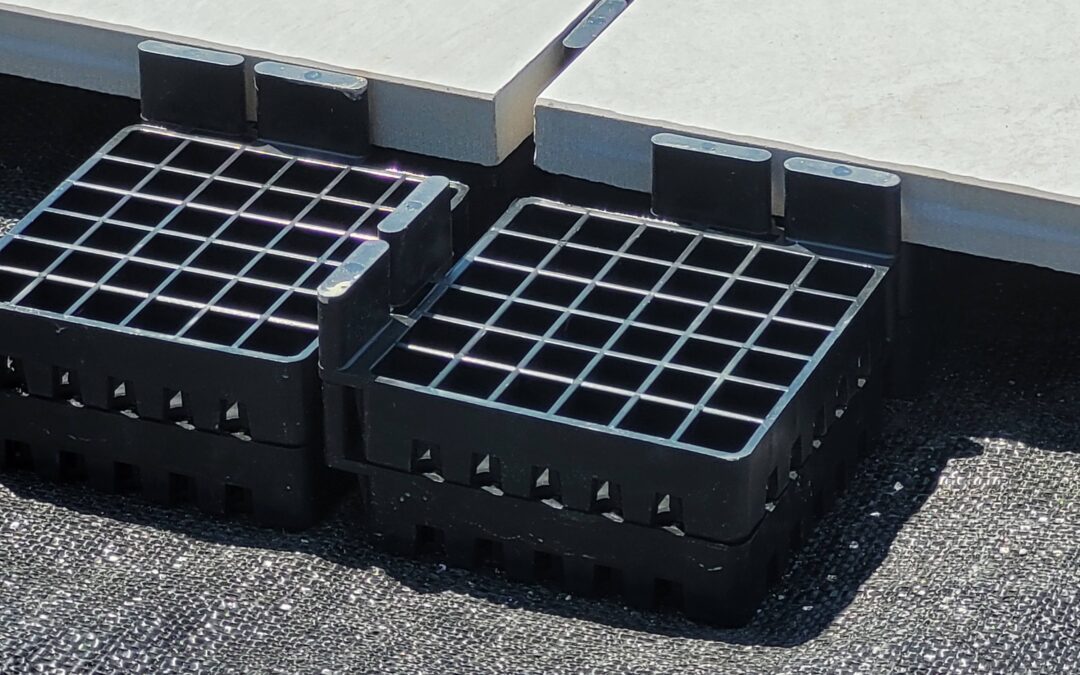
Adjustable “screw-jack” pedestals introduce mechanical failure points. Under constant wind vibration, threaded plastic columns can loosen, wobble, or unscrew over time. Plots PAVE-EL are solid, grid-like structures made of High-Density Polyethylene (HDPE). With no moving parts to rattle loose during a storm, the deck remains static and secure for decades.
3
High Coefficient of Friction
The grid structure of PAVE-EL bites into insulation or protection board without puncturing it, while upper ribs secure all four corners of each paver. This creates a high-friction assembly that resists lateral movement, keeping walkways aligned even during high-wind events.
The Result: 40+ Years of Zero Failures
The installation at NASA Headquarters stands as a testament to the durability of the PAVE-EL system. Despite decades of exposure to the elements, the walkway system has required:
0
Mechanical Replacements
0
Membrane Failures
0
Wind Uplift Incidents
Specify With Confidence
You don’t need to be building a rocket launchpad to appreciate safety. Whether you’re designing a high-rise condominium in Toronto or a government building in Washington, the physics of wind uplift remain the same.
If the PAVE-EL system meets the rigorous standards of NASA, the FBI, and the Smithsonian Institution, it will deliver the ultimate peace of mind for your next project.
Protect Your Project From Wind Damage
Get the technical specifications and expert guidance you need.
Download Technical Specs & CAD Details
Request a Wind Load Consultation
Call us: 1-877-508-9816 |
Email: info@envirospecinc.com
PAVE-EL® — Trusted by architects and engineers since 1979. Industry-leading 25-year warranty.
Commentaires récents