
In 2026, commercial rooftops are no longer afterthoughts. Once seen as utilitarian dead space reserved for HVAC units and maintenance access, rooftops have become the most competitive design real estate in any new building project.
From hospitality groups installing rooftop bars to corporate landlords building biophilic terraces that lure premium tenants, the trends shaping rooftop design this year are reshaping how buildings are valued, leased, and lived in.
Here are the 5 most important rooftop design trends defining commercial real estate in 2026 — and what they mean for architects, developers, and building owners.
The Trend
Biophilic Rooftop Terraces Are Replacing Lobbies as the Building’s “Front Door”
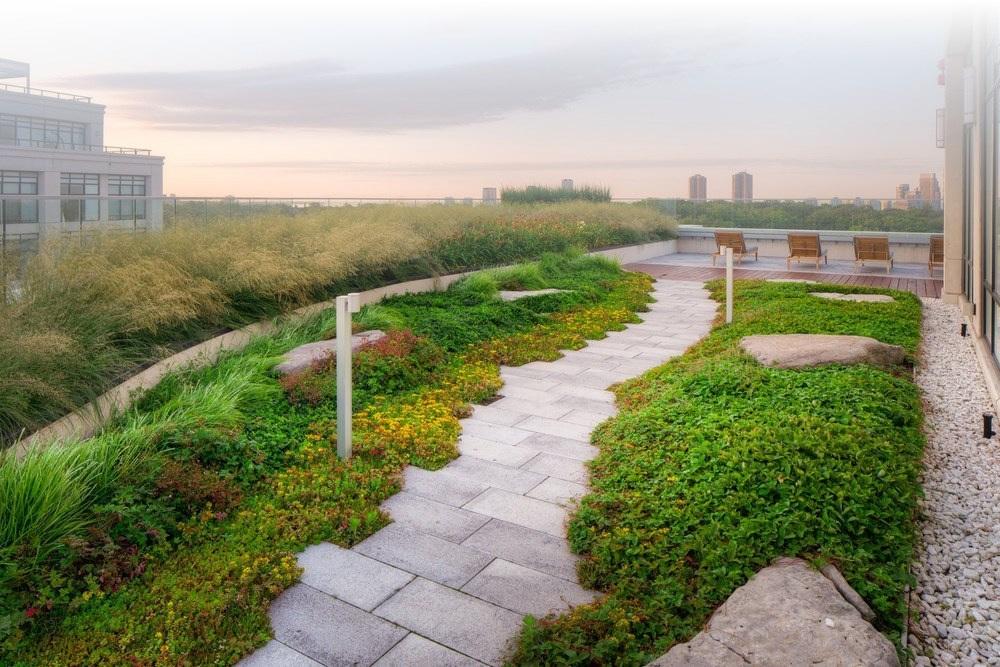
In 2026, the first impression of a building no longer happens at street level. Premium commercial tenants — especially in tech, finance, and law — are increasingly evaluating buildings by their rooftop amenity space. The lobby was the old status symbol. The rooftop is the new one.
Biophilic design — incorporating natural materials, vegetation, water features, and circadian lighting — is leading this shift. Developers are turning rooftops into landscape-driven destinations with grass, mature plants, fire features, and shaded pergolas built directly into the deck plan.
Buildings with high-quality biophilic rooftops command rent premiums of 10–20% over comparable conventional buildings in dense urban markets.
The Trend
Elevated Pedestal Systems Are Replacing Traditional Bonded Deck Construction
Across new builds and major retrofits, architects are abandoning bonded paver installations in favor of elevated pedestal systems. The reason is simple: pedestal systems are removable, accessible, and protective of the membrane underneath — bonded pavers are none of those things.
When a building owner needs to access the membrane for inspection or repair, a pedestal-supported deck can be lifted, accessed, and replaced. A bonded deck has to be demolished. For multi-decade asset planning, this is a non-trivial difference.
Pedestal systems like PAVE-EL protect the waterproofing membrane, eliminate point-loading, and allow individual pavers to be replaced without disturbing the rest of the deck — extending overall system life dramatically.
The Trend
Mixed-Use Rooftops Combining Amenity, Energy, and Stormwater Functions
The single-function rooftop is dead. In 2026, the most innovative rooftop designs are stacking multiple functions in zones: photovoltaic solar arrays on one side, green roof plantings for stormwater retention in the middle, and a pedestal-supported paver amenity terrace on the most accessible portion.
This zoned approach turns a single rooftop into a financial multi-tool: energy generation reduces operational costs, vegetation meets stormwater compliance, and the amenity space generates tenant value — all on the same footprint.
Mixed-use rooftops can unlock multiple municipal incentive programs simultaneously while supporting sustainability tier compliance like LEED, BREEAM, and the Toronto Green Standard.
The Trend
Hospitality-Inspired Rooftops in Office and Residential Buildings
Office towers and condo developments are borrowing heavily from hotel design language: cabanas, plunge pools, outdoor kitchens, fire pits, and built-in lounge seating. The line between commercial amenity and resort design is blurring fast.
This shift is driving demand for engineered pedestal systems that can support heavy installed furniture, planters, and water features while maintaining membrane integrity and drainage. The “look” is hospitality — the engineering underneath is much more demanding than a standard rooftop deck.
Premium amenity rooftops directly impact tenant retention and rental rates — but only when the deck system can support the load and water demands of the features above it.
The Trend
Climate-Resilient Specifications Are Becoming Non-Negotiable
Climate volatility — including extreme heat waves, freeze-thaw cycles, intense rainfall, and high wind events — is forcing a complete rethink of rooftop specifications. Climate-resilient design is no longer a sustainability nice-to-have; it’s a structural requirement.
Architects are increasingly specifying pedestal systems engineered specifically for North American climate conditions — with wind uplift performance, freeze-thaw resistance, and through-drainage capabilities built into the product, not added as afterthoughts.
PAVE-EL was engineered specifically for North American climatic conditions over 40+ years — with zero product failures across freeze-thaw cycles, wind uplift events, and extreme weather conditions.
The Common Thread
What Every Trend Has in Common
Look at the five trends together and a pattern emerges: every one of them depends on what’s happening underneath the pavers. Biophilic terraces need drainage. Pedestal systems need engineering. Mixed-use rooftops need flexibility. Hospitality rooftops need load capacity. Climate-resilient design needs proven performance.
For 40+ years, the PAVE-EL Pedestal System has been the foundation that makes ambitious rooftop design possible — used at NASA, the FBI, the Smithsonian, Ontario Parliament Buildings, and hospitals and universities across North America. Whether you’re designing a green amenity terrace, a hospitality-grade rooftop bar, or a climate-resilient mixed-use roof, what’s underneath determines what’s possible above.
Powering Landmark Rooftops Including
| 🏛️ Smithsonian Institution |
🏛️ FBI Headquarters |
🚀 NASA |
🏥 Hospitals & Universities |
Download our complete CAD details and design files — ready to integrate into your next rooftop project, whether it’s a biophilic terrace, hospitality deck, or mixed-use roof.
Commentaires récents