
Product Comparison · Roof Pedestal Systems
Screw-Jack vs. PAVE-EL: Comparing Roof Paver Support Systems
By Envirospec Technical Team · 6 min read
When specifying an elevated deck system for a commercial roof, architects and landscape designers generally choose between two distinct engineering philosophies: Adjustable Screw-Jack Pedestals and Monolithic Grid Pedestals (such as the PAVE-EL Pedestal System).
While both systems aim to achieve a level walking surface over a sloped roof membrane, their mechanical designs yield drastically different results over a 20-to-40-year lifespan. Here is an objective comparison to help you make the safest choice for your next project.
Side-by-Side Comparison
01 — Engineering
The Mechanics: Moving Parts vs. Static Strength
⚠️ Screw-Jack SystemsThese rely on a threaded plastic cylinder that twists up or down to adjust height. While this allows for micro-adjustments during installation, it introduces a critical vulnerability: moving parts. Under constant micro-vibrations of pedestrian traffic, wind uplift, and building settling, threaded plastic can slowly unwind, causing the deck to become uneven. Over decades, threads can become brittle, seize up, or strip. |
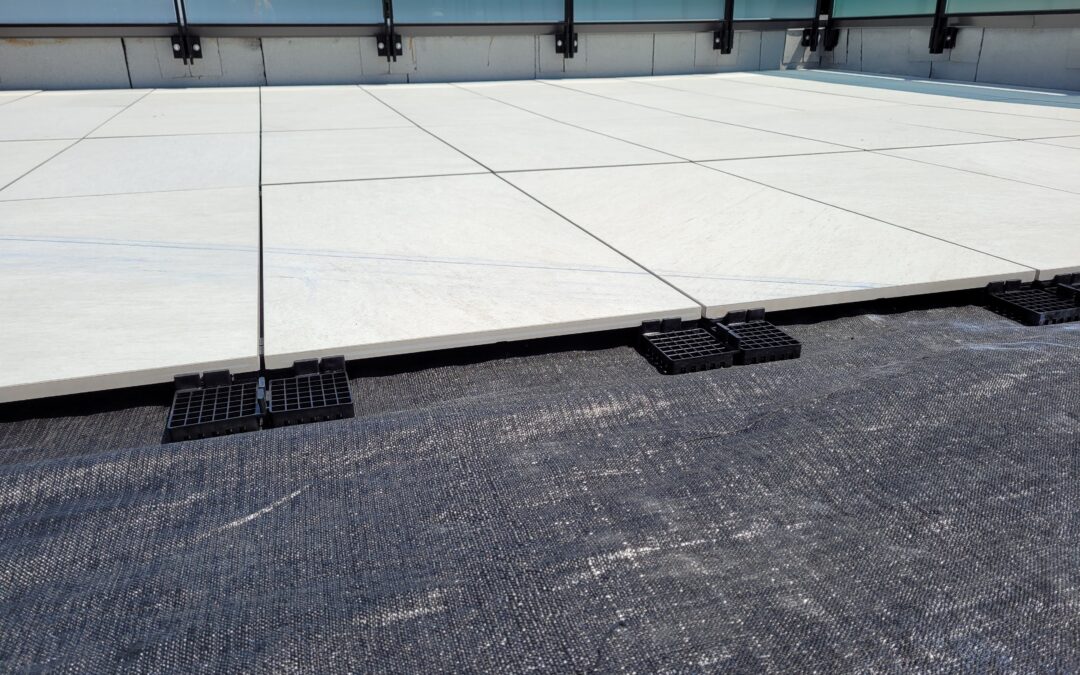
✅ PAVE-EL Monolithic GridPAVE-EL uses a static, stackable grid made of High-Density Polyethylene (HDPE). Leveling is achieved by inserting sloped leveling plates (1/8″ to 1/2″) underneath the pedestal. Because there are zero moving parts, there is nothing to unscrew, seize, or break. Once installed, a PAVE-EL deck remains permanently static. |
02 — Membrane Protection
Point Loading vs. Weight Distribution
Protecting the roofing membrane from puncture is the highest priority on any elevated deck project.
Screw-jack pedestals transfer the immense weight of the paver down through a central column to a flat plastic base — creating a concentrated point load that can slowly press into rigid insulation or puncture the waterproofing membrane, especially in hot climates where roofing materials soften.
PAVE-EL’s grid structure is designed specifically to prevent point-loading. Weight is dispersed evenly across a broad, open-grid footprint, ensuring the structural integrity of the insulation and membrane below is never compromised.
03 — Installation
Installation Speed and Contractor Labor
Time is money on a commercial job site. Screw-jack systems require the contractor to painstakingly twist and laser-level every single pedestal — a process that can dramatically inflate labor costs.
The PAVE-EL system is remarkably intuitive. Contractors simply stack the pedestals and slide in leveling plates to correct the roof’s slope (up to 5%). No lasers, no special tools, no special skills required. This foolproof installation drastically reduces man-hours and minimizes contractor error, ensuring the as-built matches your specification perfectly.
“If you are designing a permanent commercial roof terrace for a hospital, high-rise, or government facility — where failure is not an option — static reliability wins.”
04 — The Verdict
Minimizing Liability Over the Long Term
If you need an infinitely adjustable temporary floor, a screw-jack system is a viable option. However, for permanent commercial roof terraces — hospitals, high-rises, government facilities — static reliability wins.
With zero moving parts, superior weight distribution, and a 40-year track record of zero product failures (including installations at NASA and the FBI), PAVE-EL is the definitive safe choice for architects seeking to minimize long-term liability.
Download Engineering Data
Compare the specs for yourself. Download the PAVE-EL engineering data ou contact our team to discuss the specific load requirements of your next project.
Ready to Specify?
Choose the System Built to Last 40+ Years.
Envirospec provides complimentary assistance with estimating and reviewing plans — from preliminary design through to product application. Let’s talk about your project.
Commentaires récents